5 Vegetables Coloring Pages Free Printable for Kids
Coloring is more than just a fun pastime for children—it’s a powerful learning tool that helps develop creativity, focus, and fine motor skills. When combined with educational themes like vegetables, coloring pages can also introduce kids to healthy foods and basic vocabulary in an enjoyable way. In this blog post, we’re excited to share 5 Vegetables Coloring pages free printable that are perfect for preschoolers, kindergarteners, and early elementary learners.
These printable pages are designed to be simple, engaging, and easy to use at home or in the classroom. Whether you’re a parent, teacher, or homeschooler, vegetable-themed coloring pages can be a valuable addition to your learning resources.
Why Choose Vegetable Coloring Pages?
Vegetables are an essential part of everyday life, yet many children are unfamiliar with their names, shapes, and colors. Coloring pages featuring vegetables help bridge that gap in a fun and non-intimidating way.
Here are some key benefits of using vegetable coloring pages:
- Build healthy food awareness: Kids begin to recognize vegetables and associate them with positive activities.
- Improve fine motor skills: Coloring helps strengthen hand muscles and coordination.
- Encourage creativity: Children can use realistic colors or let their imagination run free.
- Support early learning: Labelled vegetables help with word recognition and spelling.
When children color vegetables regularly, they become more comfortable seeing them on their plates too!
What’s Included in Our 5 Vegetable Coloring Pages?
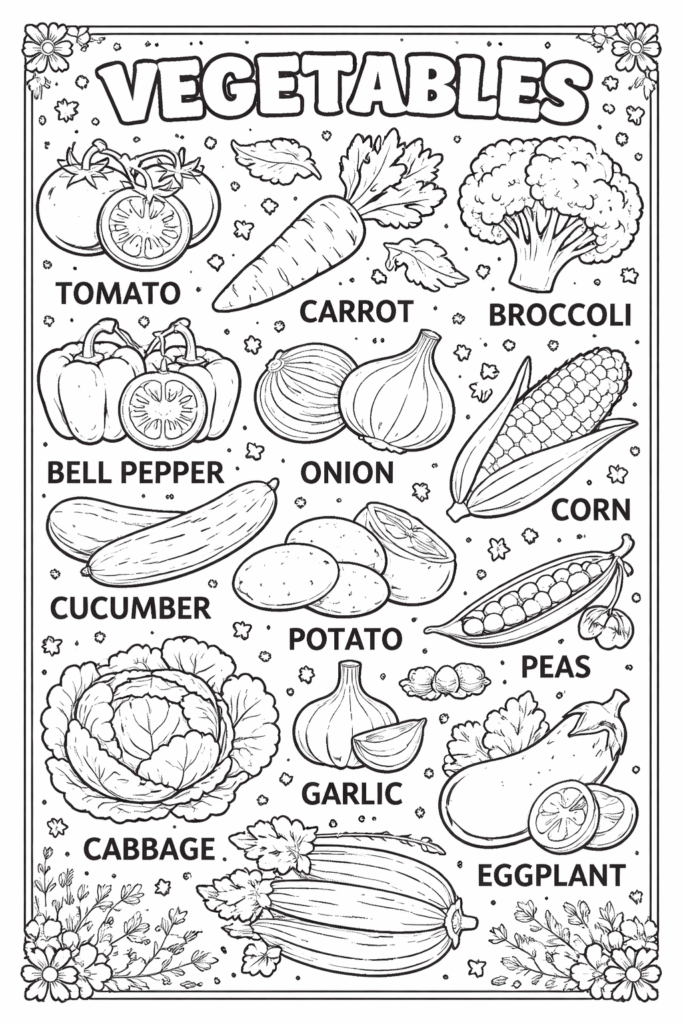
Our printable set includes five carefully selected vegetable coloring pages that are commonly recognized and easy for kids to learn. Each page focuses on clear outlines, kid-friendly designs, and simple labeling to make learning effortless.
1. Carrot Coloring Page
The carrot coloring page features a bold outline and leafy top, making it easy for little hands to color. Carrots are a great vegetable to introduce because of their bright orange color and simple shape. This page is ideal for teaching color recognition and healthy eating habits.
2. Tomato Coloring Page
Although often debated as a fruit, tomatoes are commonly grouped with vegetables in early learning. This coloring page includes whole and sliced tomatoes, helping kids understand shapes and textures. It’s a great opportunity to talk about foods used in salads and cooking.
3. Broccoli Coloring Page
Broccoli can seem intimidating to kids, but coloring it makes it friendlier! This page highlights the tree-like structure of broccoli, encouraging children to explore different shades of green while learning about nutritious vegetables.
4. Onion Coloring Page
The onion coloring page introduces a new shape and layered design. It’s perfect for teaching kids about vegetables used in daily cooking. The simple illustration allows children to experiment with light and dark shading.
5. Potato Coloring Page
Potatoes are familiar and comforting for most children. This coloring page includes whole and sliced potatoes, making it easy to explain how vegetables can look different when prepared in various ways.
Together, these pages form a balanced and engaging printable set that kids will enjoy coloring again and again.
Educational Uses for Vegetable Coloring Pages
Vegetable coloring pages are incredibly versatile and can be used in many learning environments. Here are some practical ideas to get the most out of them:
Classroom Activities
Teachers can use these coloring pages during health lessons, science units, or quiet time. Pair coloring with discussions about where vegetables grow and why they’re good for our bodies.
Homeschool Learning
For homeschoolers, vegetable coloring pages can be part of a nutrition unit or farm-to-table lesson. You can combine coloring with hands-on activities like cooking or gardening.
Preschool and Daycare
Simple vegetable illustrations are perfect for preschool settings. They help children practice holding crayons, staying within lines, and learning new words.
Printable Worksheets
You can turn coloring pages into worksheets by asking kids to trace the vegetable name, count items, or match colors after coloring.
Tips to Make Coloring Time More Engaging
To enhance the learning experience, try these simple tips:
- Talk while coloring: Ask questions like “What color is this vegetable?” or “Have you eaten this before?”
- Use real vegetables: Show real vegetables alongside the coloring page for visual comparison.
- Encourage creativity: Let kids use unusual colors to make the activity fun and stress-free.
- Display artwork: Hang finished pages on the wall to boost confidence and pride.
These small steps can turn a simple coloring activity into a meaningful educational moment.
Benefits for Parents and Teachers
Printable coloring pages are convenient, affordable, and reusable. Parents appreciate having screen-free activities that keep kids engaged, while teachers benefit from ready-to-use resources that support learning goals.
With 5 Vegetables Coloring pages free printable, you don’t need special supplies—just print, color, and enjoy. These pages are designed to save time while delivering educational value.
How to Use Free Printable Coloring Pages Effectively
To get the best results from printable coloring pages:
- Print on standard A4 or US Letter paper.
- Use crayons, colored pencils, or markers depending on age.
- Store finished pages in a folder or binder as a learning portfolio.
- Revisit pages later to reinforce learning and track progress.
Consistency is key—regular coloring sessions can significantly support early development.
Final Thoughts
Vegetable coloring pages are a simple yet powerful way to combine fun and learning. They help children recognize healthy foods, build essential skills, and enjoy creative expression—all at the same time.
If you’re looking for an engaging, educational, and easy-to-use resource, these 5 Vegetables Coloring pages free printable are an excellent choice. Perfect for home, school, or daycare, they make learning about vegetables enjoyable and memorable for every child.