14 Science Worksheets Free Printable for Kids – Educational
If you’re looking for science worksheets free printable resources that make learning exciting, you’re in the right place! Science doesn’t have to feel like another school subject. With fun activities, hands-on learning, and creative coloring pages, kids can explore the amazing world around them while having a great time.
As someone who loves creating educational printables, I’ve seen how a simple worksheet can completely change a child’s attitude toward learning. Give them crayons, interesting pictures, and a few fun challenges, and suddenly science becomes their favorite subject. Isn’t that every parent’s and teacher’s dream?
Whether you’re homeschooling, teaching in a classroom, or simply keeping little learners busy during weekends, these printable worksheets are designed to make science simple, interactive, and enjoyable.
Why Choose Science Worksheets Free Printable?
Science is full of questions, discoveries, and exciting experiments. Printable worksheets help children organize what they learn while reinforcing important concepts.
Some of the biggest benefits include:
- Encourages independent learning
- Improves observation skills
- Develops critical thinking
- Makes learning visual with coloring pages
- Supports classroom and homeschool lessons
- Keeps screen time under control
- Builds confidence through fun activities
The best part? Kids don’t even realize they’re learning because they’re too busy having fun!
14+ Science Worksheets Free Printable Ideas
Let’s explore some exciting worksheet ideas your children will love.
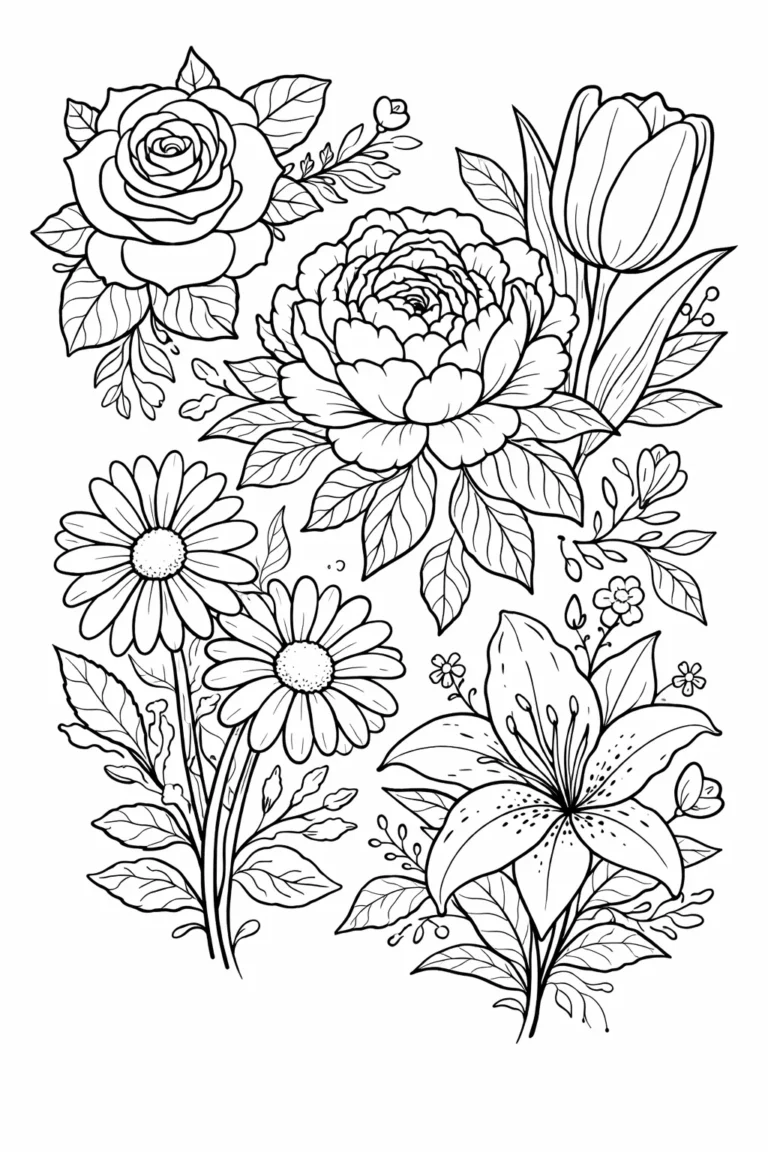
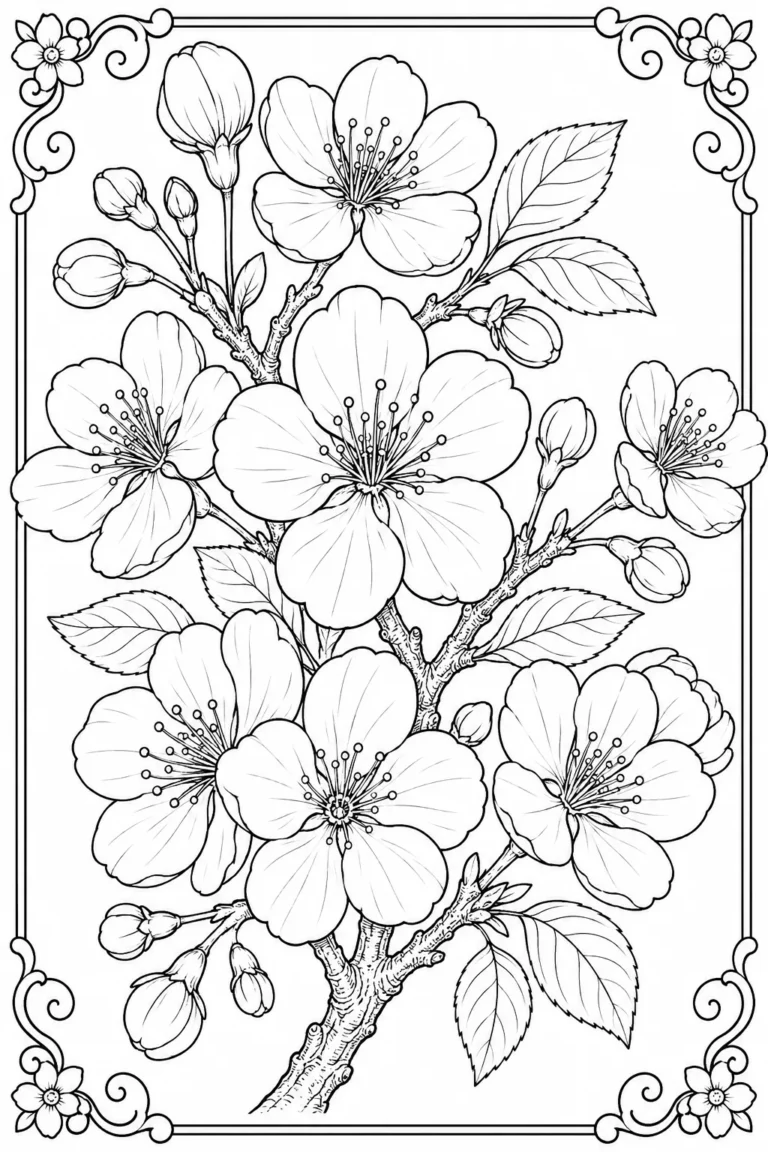
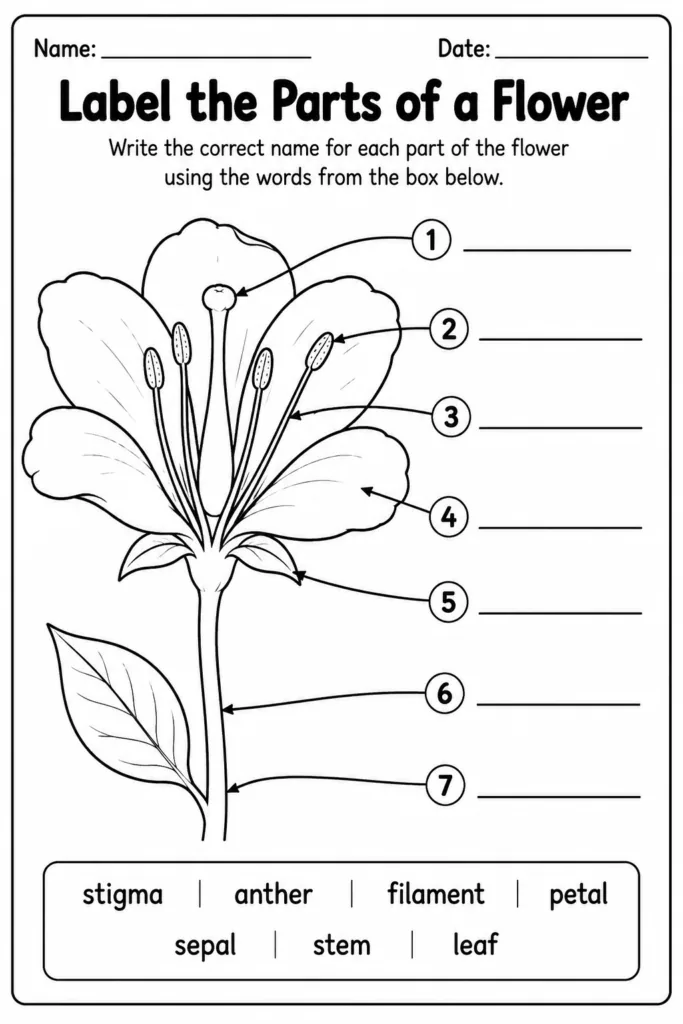
1. Label the Parts of a Flower Worksheet
Flowers are fascinating, especially when kids learn what each part does.
Children can:
- Color the flower
- Label petals, stem, leaves, roots, pistil, and stamen
- Learn basic plant anatomy
This worksheet works wonderfully alongside outdoor nature walks.
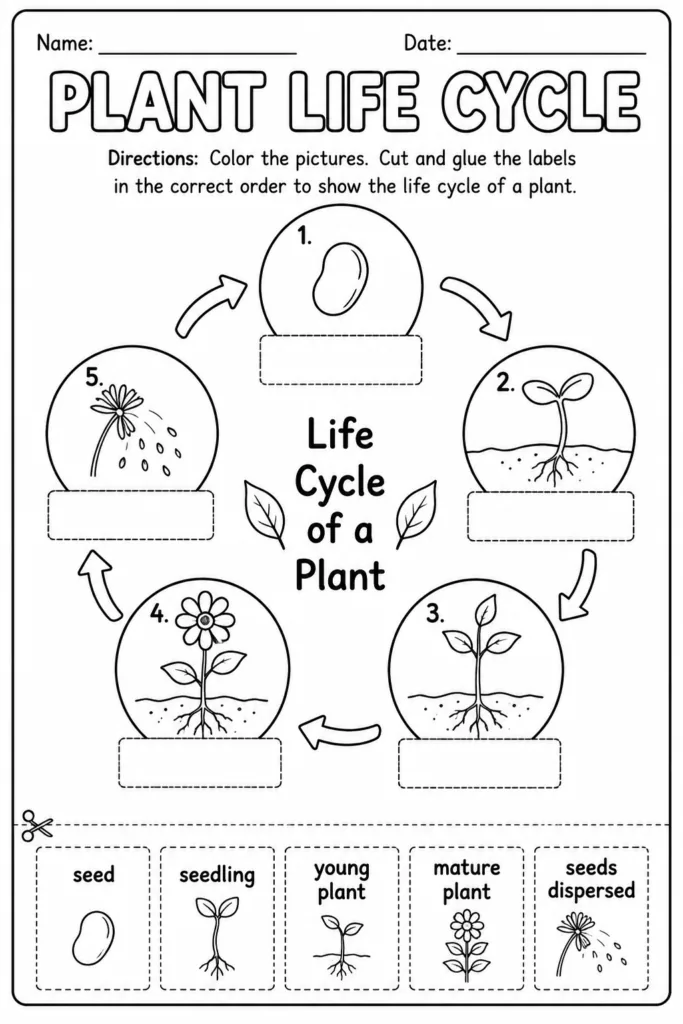
2. Plant Life Cycle Activity Page
One of the most popular science worksheets teaches how plants grow from tiny seeds into beautiful flowers.
Children learn the stages:
- Seed
- Germination
- Seedling
- Mature plant
- Flower
- New seeds
This plants life cycle activity combines science with coloring, making every stage memorable.
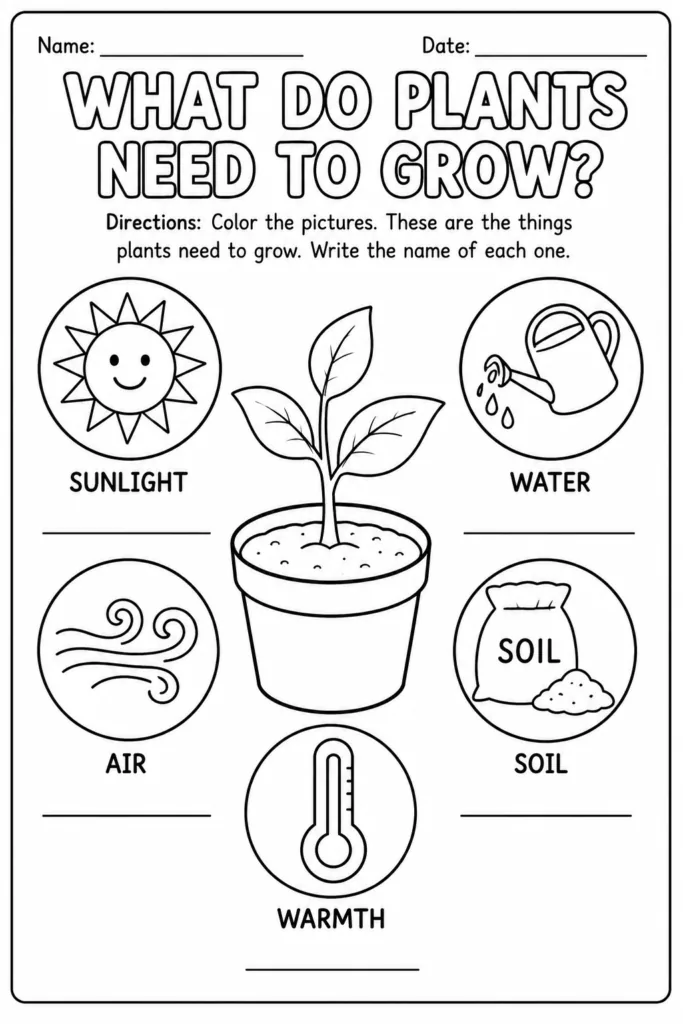
3. What Do Plants Need to Grow?
Ever heard a child ask why plants need sunlight?
This worksheet explains the basics through fun illustrations.
Kids identify:
- Sunlight
- Water
- Air
- Soil
- Space
- Nutrients
Simple activities help reinforce each concept.
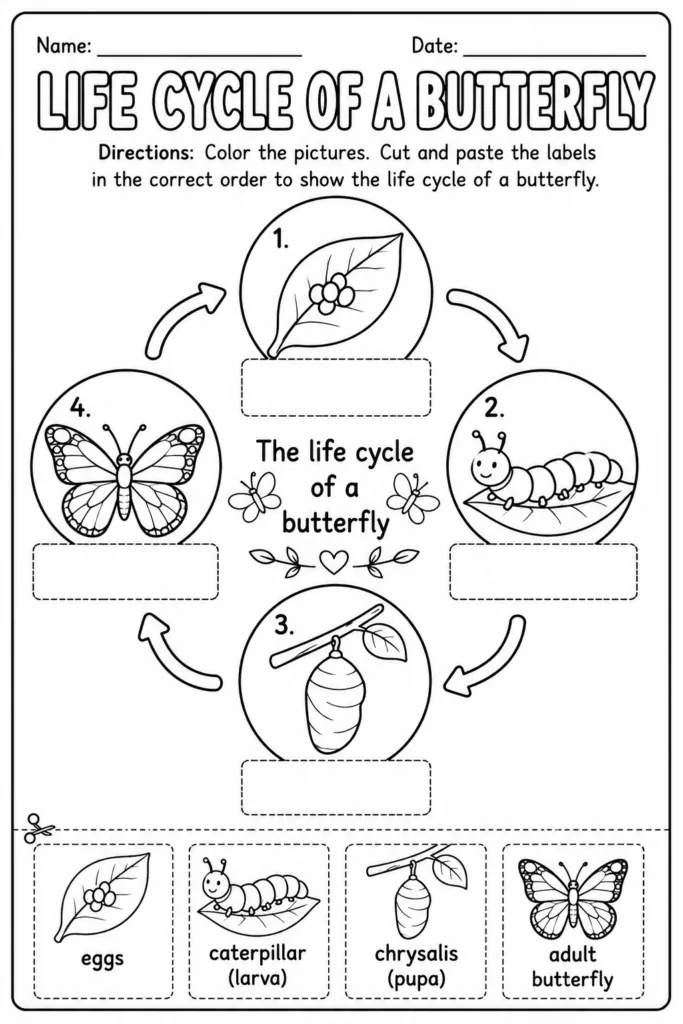
4. Butterfly Life Cycle Worksheet
The butterfly life cycle is one of the most exciting transformations in nature.
Children color each stage while learning:
- Egg
- Caterpillar
- Chrysalis
- Butterfly
This worksheet introduces biology in a way young learners easily understand.
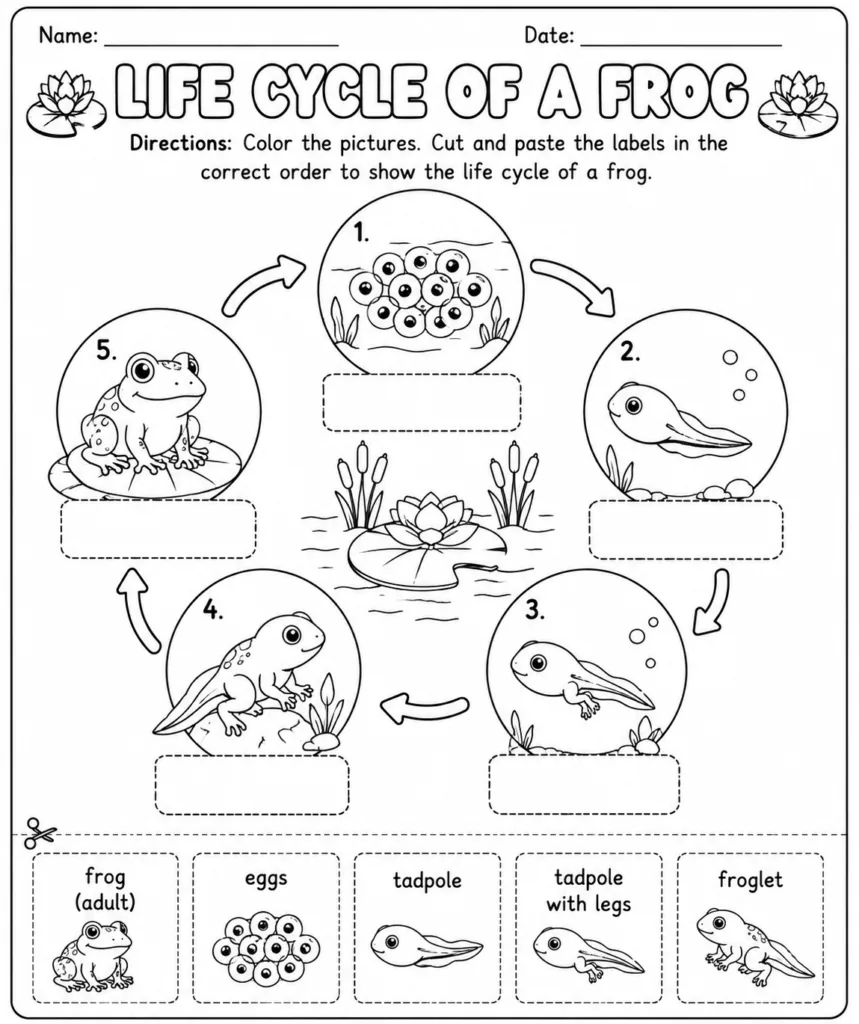
5. Frog Life Cycle Activity
Frogs go through incredible changes.
Students color and arrange:
- Eggs
- Tadpole
- Tadpole with legs
- Froglet
- Adult frog
Activities like this improve sequencing skills while teaching science.
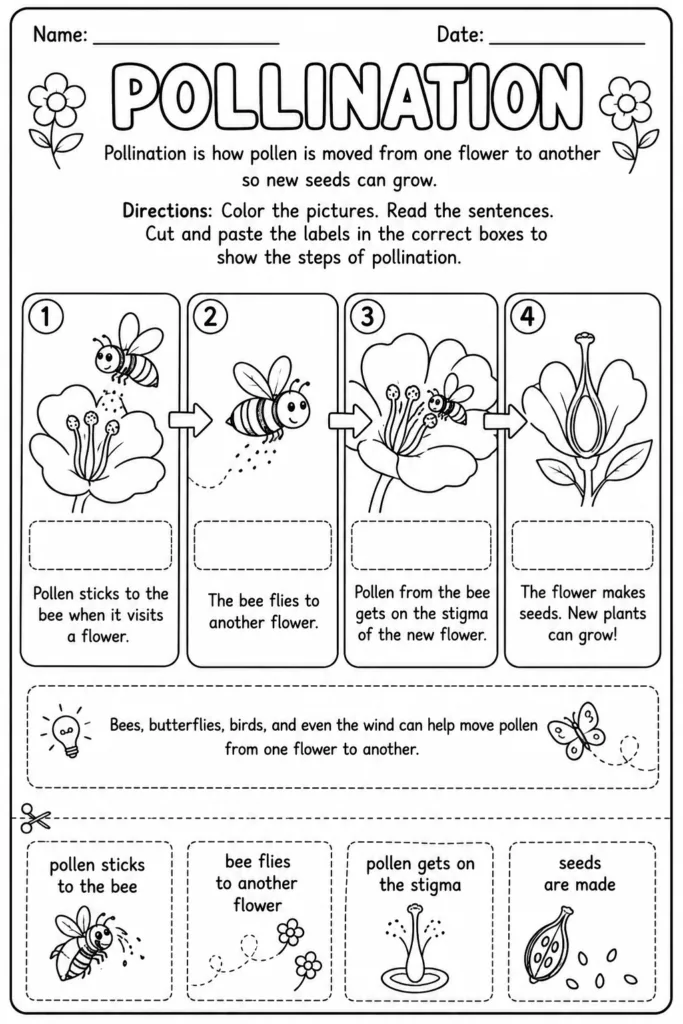
6. Pollination Activity
Pollination may sound complicated, but colorful worksheets make it easy.
Kids discover:
- Bees
- Flowers
- Pollen
- Nectar
- Plant reproduction
A few simple matching activities help everything click.
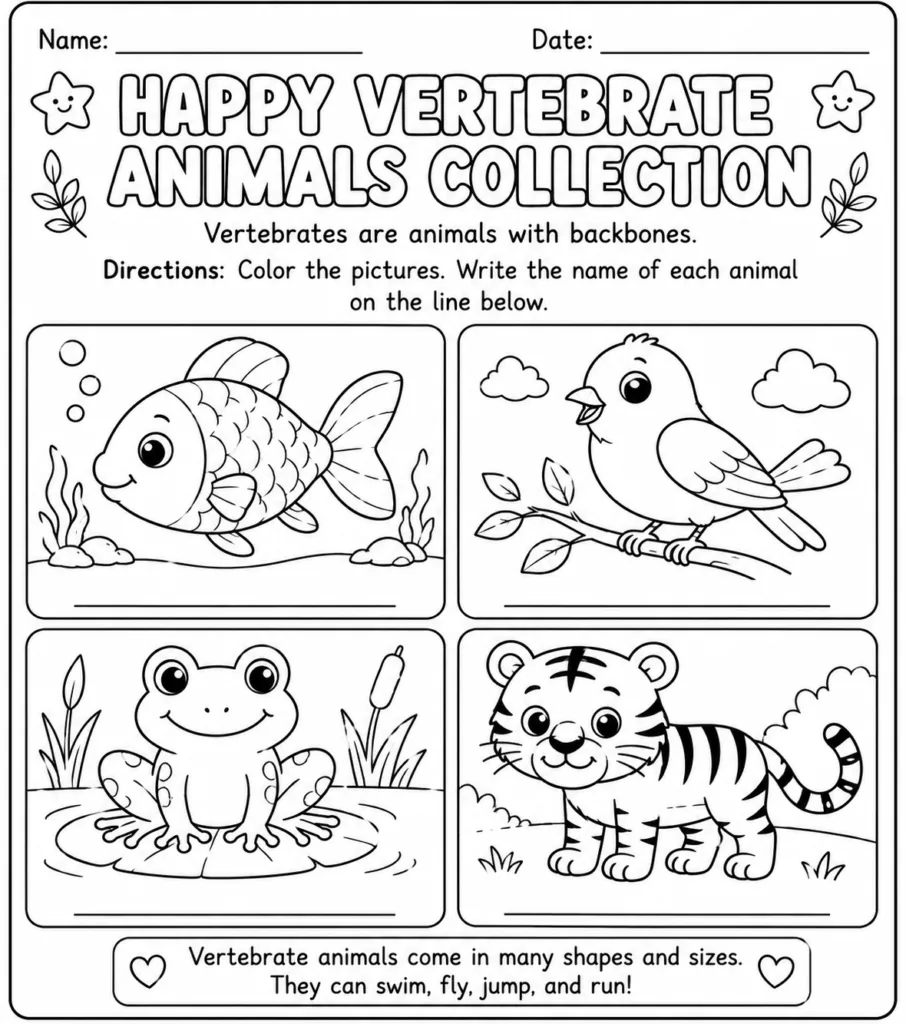
7. Vertebrate Animals Collection
This worksheet introduces vertebrates through adorable coloring pages.
Examples include:
- Fish
- Bird
- Frog
- Tiger
Children identify animals with backbones while practicing classification.
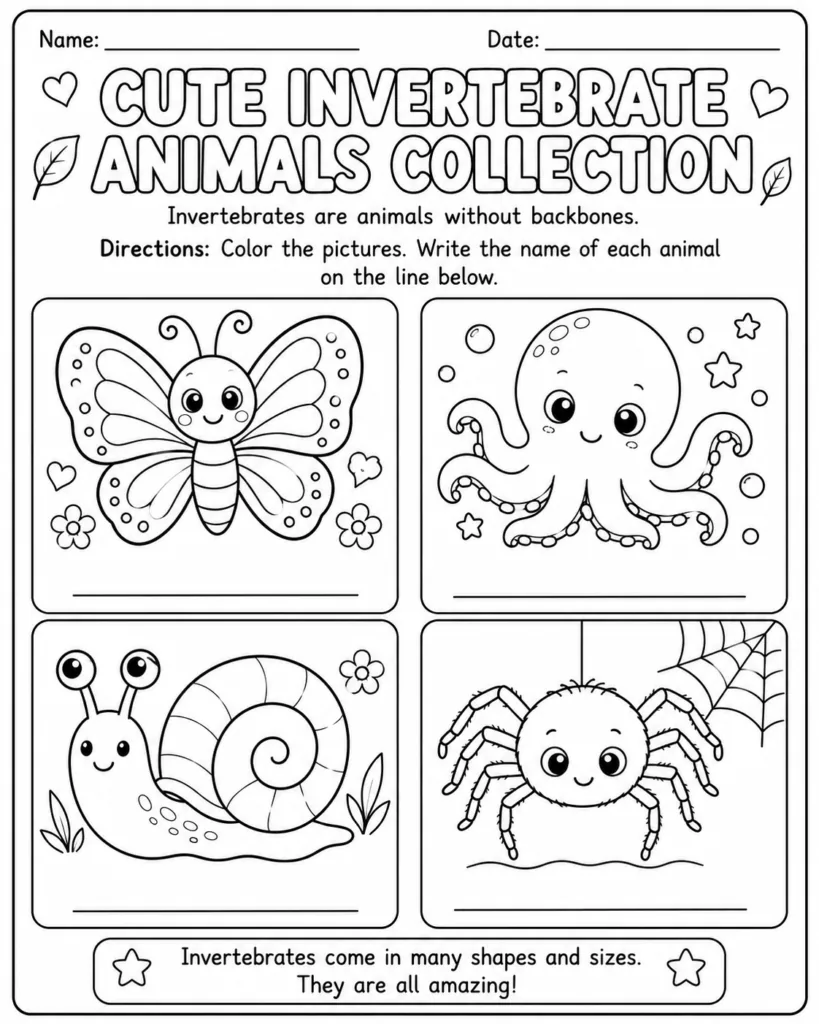
8. Invertebrate Animals Collection
Next comes the fascinating world without backbones.
Kids color:
- Butterfly
- Spider
- Snail
- Octopus
Comparing vertebrates and invertebrates becomes much easier with visual learning.
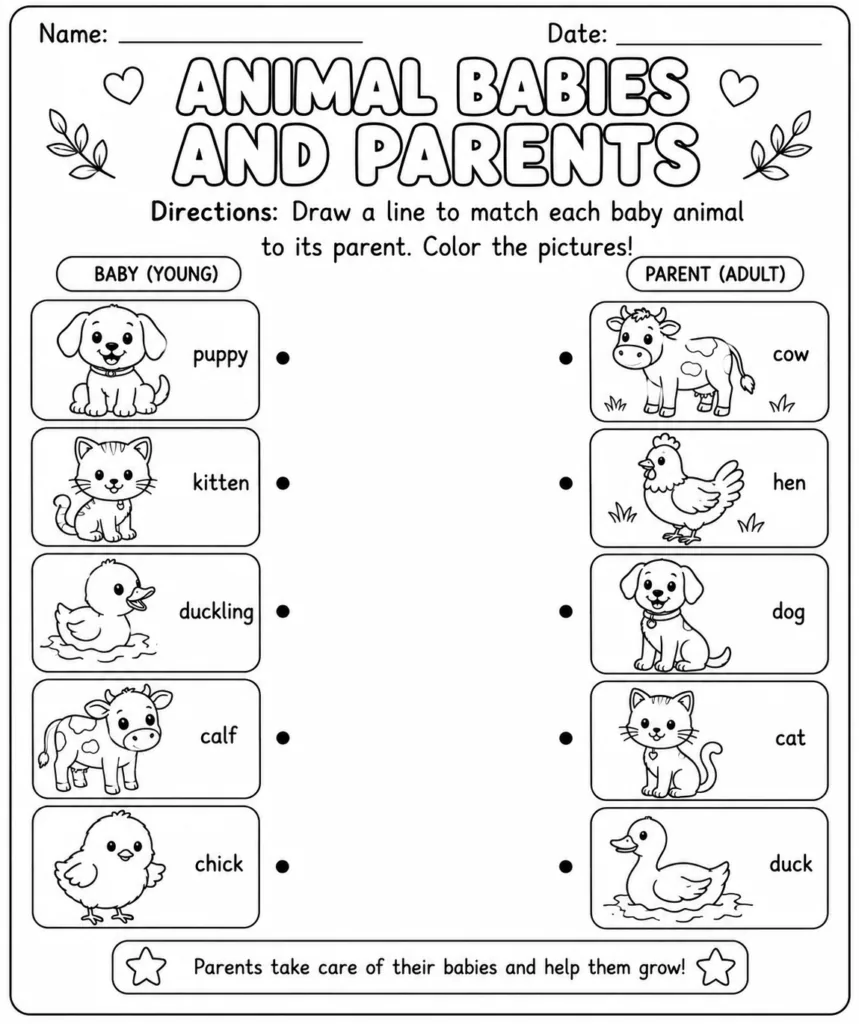
9. Animal Babies and Parents Matching
Who doesn’t love baby animals?
Children match:
- Puppy → Dog
- Kitten → Cat
- Chick → Hen
- Duckling → Duck
- Calf → Cow
Matching activities strengthen memory and observation skills.
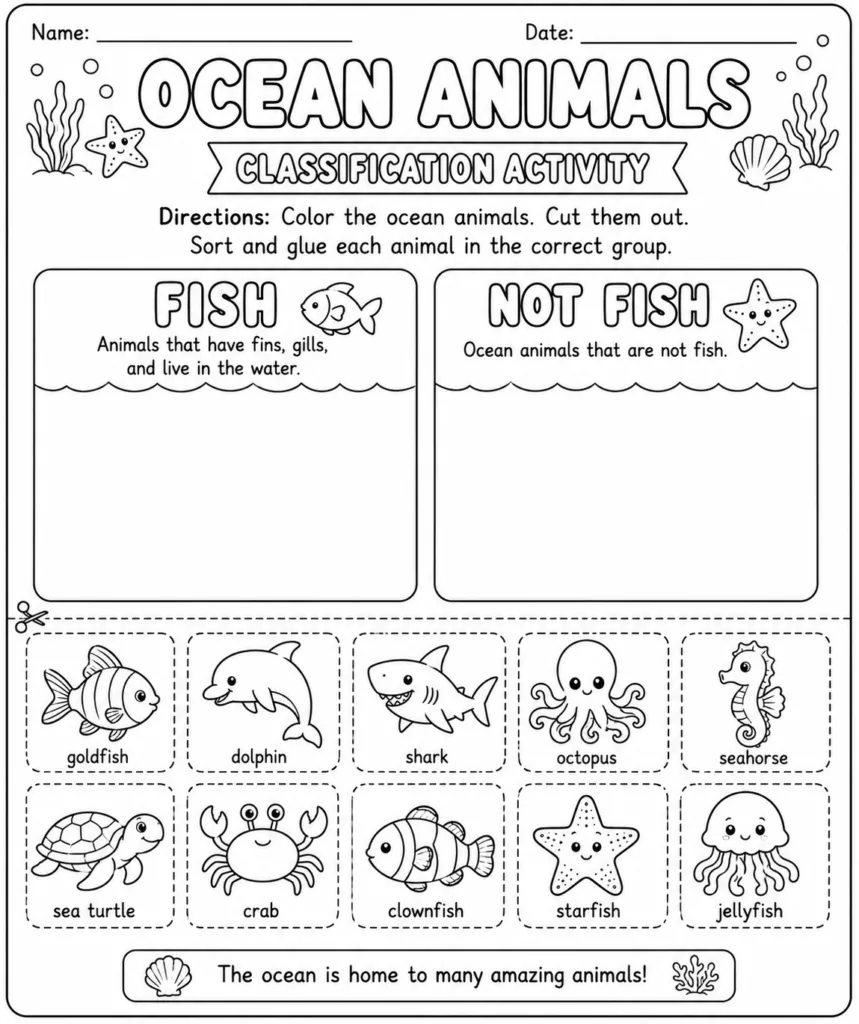
10. Ocean Animals Classification
Dive beneath the waves!
Kids sort animals into categories like:
- Fish
- Not Fish
Examples include:
- Shark
- Dolphin
- Jellyfish
- Crab
- Seahorse
- Turtle
It’s a fantastic introduction to marine biology.
11. Match Animals to Their Habitats
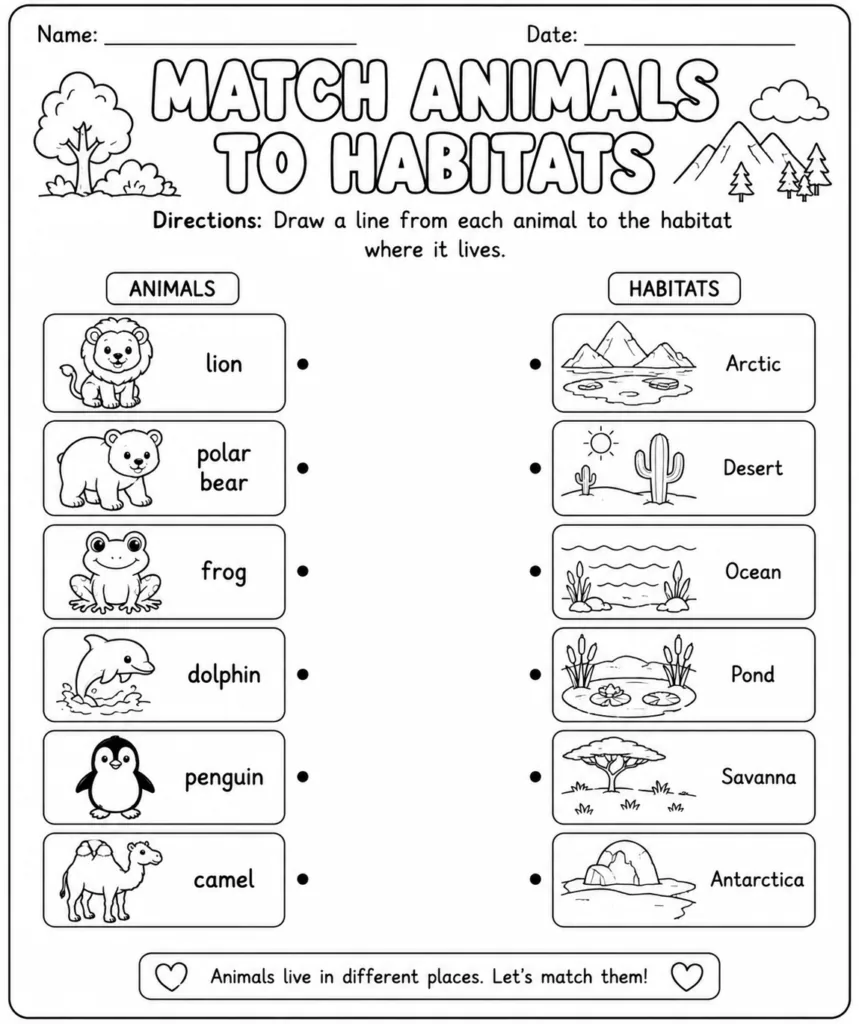
Where does each animal belong?
Children connect:
- Camel → Desert
- Frog → Pond
- Dolphin → Ocean
- Polar Bear → Arctic
- Lion → Savanna
- Penguin → Antarctica
This worksheet encourages logical thinking while teaching habitats.
12. Animal Food Chain Worksheet
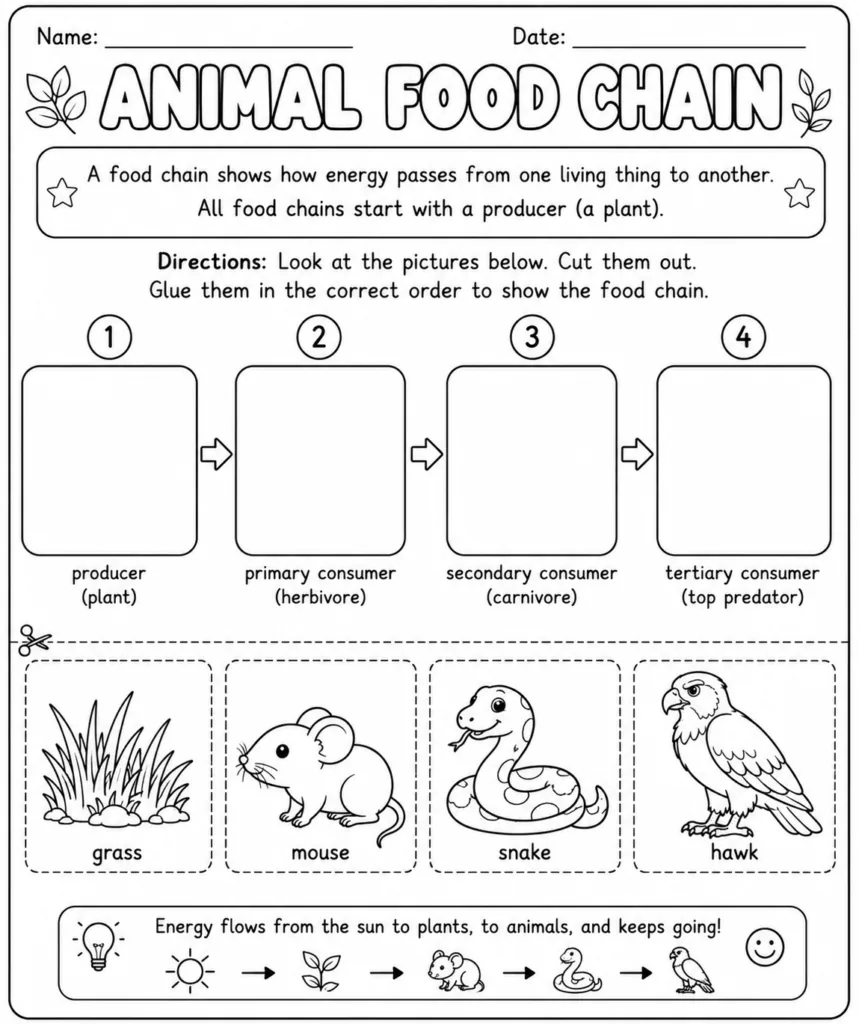
Food chains become much easier when children can see the process.
A simple example:
Grass → Mouse → Snake → Hawk
Students cut, arrange, and color each stage while learning how energy flows through nature.
Pretty cool, right? 😊
13. Mammals Classification Worksheet
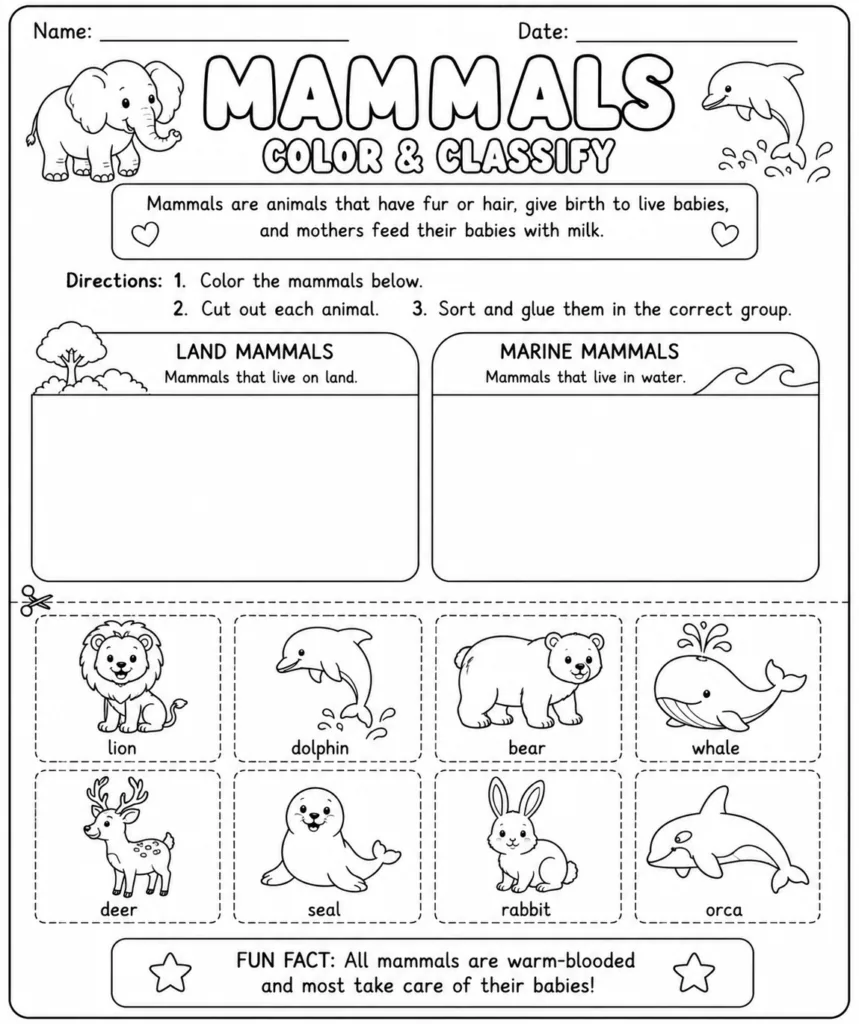
Children discover what makes mammals unique.
Activities include sorting:
Land Mammals
- Lion
- Bear
- Rabbit
- Deer
Marine Mammals
- Dolphin
- Whale
- Seal
- Orca
This worksheet also explains characteristics like warm blood and milk production.
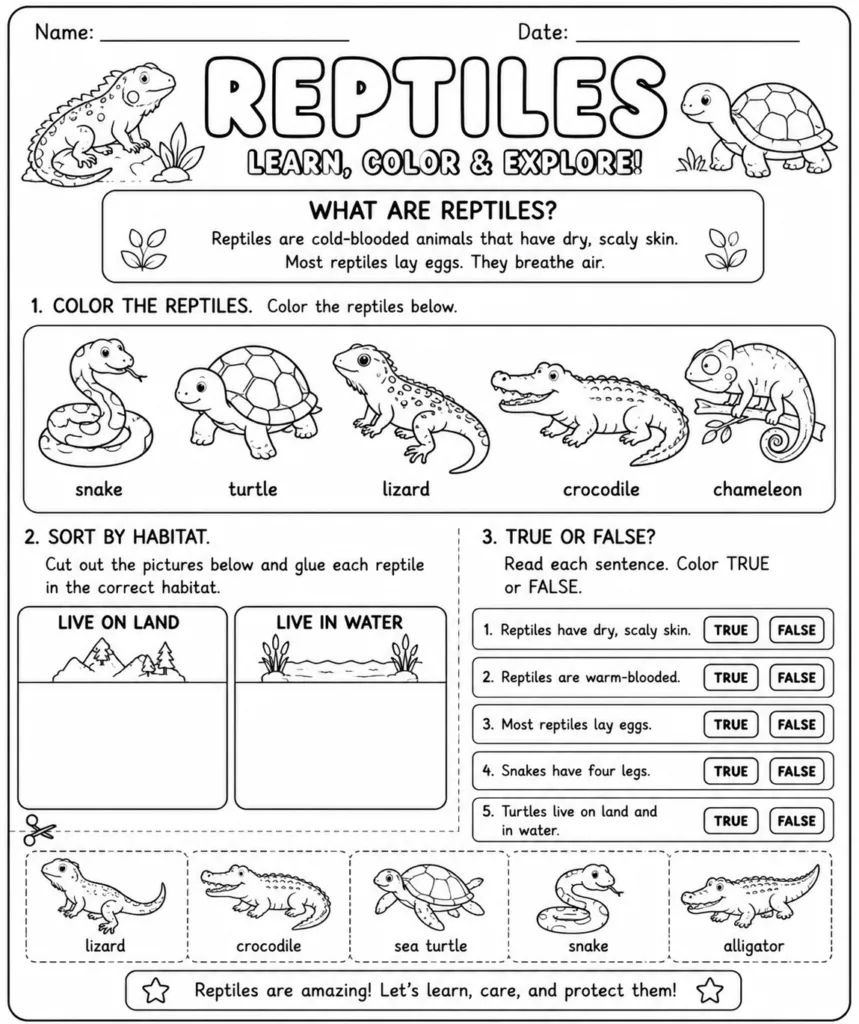
14. Reptiles Learning Activity
Reptiles are always a classroom favorite.
Kids color:
- Turtle
- Snake
- Crocodile
- Lizard
- Chameleon
They also answer simple true-or-false questions to reinforce learning.
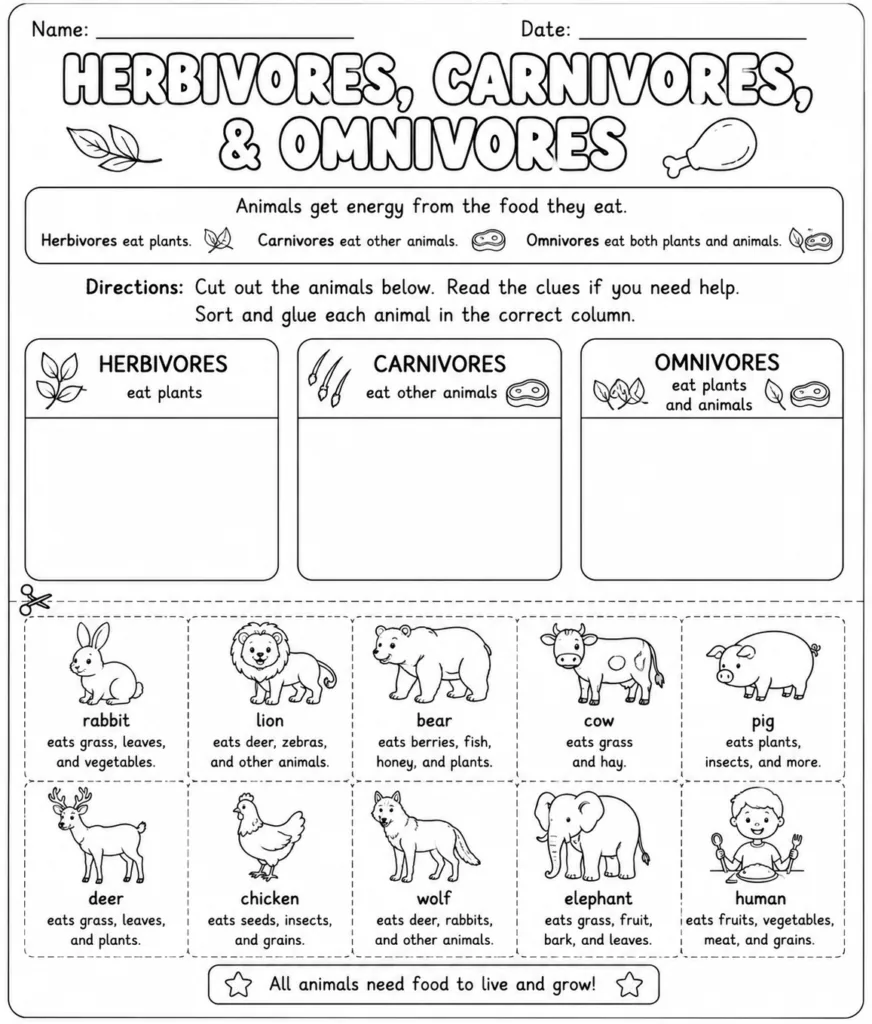
15. Herbivores, Carnivores, and Omnivores Sorting Activity
Animals eat different foods.
Can your kids sort them correctly?
Herbivores
- Cow
- Rabbit
- Deer
- Elephant
Carnivores
- Lion
- Wolf
Omnivores
- Bear
- Pig
- Human
- Chicken
Hands-on sorting activities make learning much more engaging.
Why Coloring Pages Improve Science Learning
Many people underestimate the power of coloring pages.
Here’s why they work so well:
- Improve concentration
- Strengthen fine motor skills
- Help children remember concepts visually
- Reduce learning anxiety
- Encourage creativity
IMO, combining science with coloring is one of the easiest ways to keep kids interested.
Tips for Using Science Worksheets at Home
Want to get even more from your printable worksheets?
Keep Sessions Short
Fifteen to twenty minutes is often enough for younger learners.
Ask Open-Ended Questions
Instead of giving answers immediately, ask:
- Why do you think this happens?
- What comes next?
- Can you explain your drawing?
Curiosity leads to deeper learning.
Add Real-Life Activities
Pair worksheets with hands-on experiences.
For example:
- Grow beans after completing the plants life cycle worksheet.
- Visit a garden after studying flowers.
- Observe butterflies after learning the butterfly life cycle.
Children remember experiences much longer than lectures.
Who Can Use These Printable Worksheets?
These activities work well for:
- Parents
- Homeschool families
- Preschool teachers
- Kindergarten classrooms
- Elementary students
- Tutors
- Science clubs
They’re flexible enough for nearly any learning environment.
Why Kids Love Printable Science Activities
Children naturally enjoy discovering new things.
Printable worksheets offer:
- Easy instructions
- Fun illustrations
- Interactive learning
- Creative coloring pages
- Achievement through completed activities
Instead of simply reading about science, kids actively participate in learning.
And honestly, that’s where real understanding begins.
Frequently Asked Questions
Are these science worksheets suitable for preschoolers?
Yes! Many activities are designed for preschool and kindergarten learners with simple matching, coloring, and labeling tasks.
Can I use these worksheets in my classroom?
Absolutely. Teachers often print multiple copies for science centers, morning work, homework, or review activities.
Are printable science worksheets good for homeschooling?
Definitely. They’re affordable, flexible, and easy to incorporate into daily lessons.
Which worksheet should beginners start with?
Simple activities like plants life cycle, butterfly life cycle, animal matching, and habitat worksheets are perfect starting points.
Conclusion
Science worksheets free printable resources are one of the easiest ways to make science exciting for children. From plants life cycle activities to the fascinating butterfly life cycle, every worksheet encourages curiosity, creativity, and hands-on learning. Add engaging coloring pages, matching games, and sorting activities, and you’ve got a complete learning experience that kids genuinely enjoy.
So why not print a few worksheets today? You might be surprised how quickly your little scientist starts asking questions, making discoveries, and falling in love with the amazing world of science. Happy learning!
You Might Also Like
If you enjoyed these designs, explore more Educational Purpose favorites:
- Math Worksheets and Activities Free Printables: 15+ Fun Learning Resources for Kids
- Fun Number Activities for Preschoolers Free Printable: 16+ Easy Ways to Make Learning Numbers Exciting
- 13+ Fun Alphabet Learning Activities for Preschoolers | Alphabet Learning Activities Kids Will Love
- Browse the full Educational Purpose collection for more free printable designs.